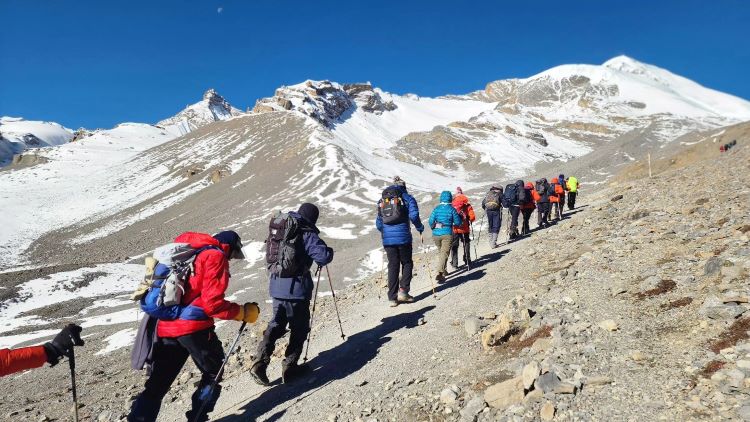
The appropriately and aptly named Annapurna Circuit had long been on many a ‘best in the world’ list for treks. This route crosses through the fertile valleys, alpine flower-blooming meadows, and under the crux of gorgeous mountain buttresses, and is a veritable delight for the trekkers. But what if you’re a first-time trekker and walking across the Himalayas sounds to you like an “experience trek”? Good news: There’s a way beginner trekkers can hit the Annapurna Circuit trail.
So if you’re feeling adventurous, and you are ready to be on top of the world, or feel on top of the world (it’s a metaphor, I was sick the whole time), get ready for the ultimate guide on trekking the Annapurna Circuit for beginners, including some physical training training tips, the complete packing list, and what you can anticipate each step of the journey!
Annapurna Circuit: Beginners’ Paradise For Anyone Who Loves Trekking – 2-Day Guide
Annapurna Round Trek Throw those things into the mix, and it is among the easier treks in Nepal. Here’s why: Next, this is easy hiking by style, but a mix of terrain and some elevation, you can walk through it leisurely as well, based on doggie fitness. You know what you could do best of all (unless you are at all interested in language just wander around the village and through the woods, in which case you might leave the nearest bit of board if you start to get lost?IsNullOr you.” (Whether we would consider you a “greater fool” is open to question. Better yet, the same tea houses — basically small, charming inns that serve food and provide lodging — dot the trail, giving hikers a place to hunker down and hold, pausing to rest and refuel whenever they please.
It’s a coasting track, get into it and understand the track, and the weather turns up a notch. And that gradual climb robs some of the scare factor from high-altitude treks.
Physical Preparation: Prepping Your Body
While the Annapurna Circuit is plausible even for a newbie, it isn’t always a breeze. You’ll spend hours a day trekking over difficult terrain, often at tons higher altitudes, which means that your body needs time to adapt to breathing thin air.
But the only way to be ready for it in any real way is to be in good enough shape to absorb it and sustain a cardiovascular effort. Hiking, walking, running, and biking are wonderful exercises to whip your heart and lungs. You don’t need to have been doing uphill work at altitude beforehand, but the better shape your body is in with long walks or hikes with a backpack, the quicker it will adjust to the work.
What you should also work on: Building your muscles in your legs, core, and ankles — hiking generally happens off-road, and those muscles need a lot of stability and balance. Lunges, squats, and step-ups are great for this. ALSO (and I’ll say it again) DON’T overlook your core – you’ll feel so much less exhaustion at the end of long days and have much better posture if you have strong abs and back muscles.
Deciding when to do your Trek
Annapurna Circuit Nepal Best Time of the Year The best time for the Annapurna Circuit Trek is during the spring (March to May) and autumn (September to November). Shares the period when the skies are clearest, the temperatures neither too high nor too low, and the rains not too copious in either season.
Especially spring, March-May, is stunning, the rhododendrons are in full bloom with vivid reds pi pinks, a nd whites at the bottom of the trail. Now the air is cooler by far, of course, and the trail isn’t nearly as crowded as in fall, and it’s a much more serene experience.
Best month for trekking to Annapurna September, October, November:- This is the money-collection season for the local community and service providers, so everyone does their best to make your travel worthwhile. That also means, though, that it can get pretty crowded, so expect it to be a little more social.
Prefer fewer people on the trail (or just plain fewer trekkers)? Then spring’s good, too.
Get Your Mind Right: Train It for the Trip
To hike the Annapurna Circuit is as much a mental task as a physical one. You are going to get tired.” — particularly as you are going up. It’s going to test your patience, your endurance, and your sanity. But the rewards — panoramic vistas of the Himalayas, the comfort and thrill of reaching your objective — will make the effort all worthwhile.
So keep it supple and upbeat, and one day at a time. Hiking things that are mountainous areas is tough, and you need a positive mindset to pull through. And sure, take a while, relax when your body tells you to, and take in the lovely nation-state at the same time as you journey amidst lovely scenery.
What to Pack for the Annapurna Circuit
You’ll want to decide what you feel comfortable with on your back and never exceed it. Here’s what you should consider:
First off, get a nice, supportive pair of hiking boots that support your ankle, and they need to resist water. So the landscapes are rugged, the weather capricious, so comfort and durability were a prerequisite. LAYER YOUR CLOTHES. In terms of clothes, it’s easier to warm up than quiet down. You’ll want a wicking base layer to maintain moisture at bay next for your skin, a relaxed mid-layer like a fleece or jacket to lure in warmth, and a defensive outer shell to preserve wind and rain at bay.
High altitude areas may be specifically cool inside the evenings, so a down jacket or heat fleece is a great addition for the nighttime. Ordering hot. It’s gonna be hot at low elevation, so bring light summer clothes.
You’ll also need a quality backpack — ideally one in the 40-50-liter range — that will be sufficiently spacious to haul all your gear, but not so hulking and top-heavy that you’ll be hurting on the way up. And just as important as good hiking boots: Don’t leave the house without hiking poles to add an element of balance on the steeper or more uneven sections of the trail, and sunglasses and sunscreen to shield yourself from intense UV rays, especially at higher elevations.
Nor will you have to carry all that bulky camping gear with you: You’ll be sleeping in tea houses as you go. Sleeping bagWarm cozy recommended (cold sleep -and above illusionist).
Basta anche portarsi in tasca una torcia frontale nel caso ci si perdesse al calar del sole (la capatina potrebbe prolungarsi più del dovuto), e un sistema per purificare l’acqua oppure delle pastiglie. And there are lots of water assets along the trail, however the water first-class may be iffy, so make sure to deal with it earlier than ingesting.
Final Thoughts
This is the lifetime trek of beginner trekkers; If geographical adversity hits the newer levels, cultural diversity would be equally rewarding. It sounds overwhelming, no question, but there are still things you can do to potentially set yourself up for success. Train well, pack well, and take in the hike at your leisure, and you’ll have an experience you won’t forget any time soon and of which you will be proud.
So buy those boots (fine, with a quality pair of hiking boots, obviously), take a deep breath, and prepare to hike what is easily one of the most epic trails on the planet. There’s even the Annapurna Circuit Mission #2 to be had, and it ain’t chopped liver.
 Tripzo